Take That’s most-streamed song in the UK is Rule the World, according to the Official Charts Company’s published ranking. The 2007 anthem leads with 101 million UK streams in the reported figures, ahead of Shine on 95 million and Back for Good on 87 million. Remarkably, the band’s biggest streaming success never reached Number One on the UK Singles Chart.
The figures reveal something fascinating about Take That’s enduring appeal. Although the Manchester group dominated the charts during the 1990s, their biggest streaming hits include songs recorded after their celebrated comeback, when Gary Barlow, Mark Owen, Howard Donald and Jason Orange reunited without Robbie Williams.
With the three-part Take That documentary available on Netflix, the group’s remarkable career is back in focus. From their early boyband success to their record-breaking reunion, Take That have built a catalogue that continues to connect with audiences decades after its original release.
Here is the complete ranking of Take That’s 20 most-streamed songs in the UK, the stories behind their biggest hits, and why Rule the World has overtaken some of their most famous Number One singles.
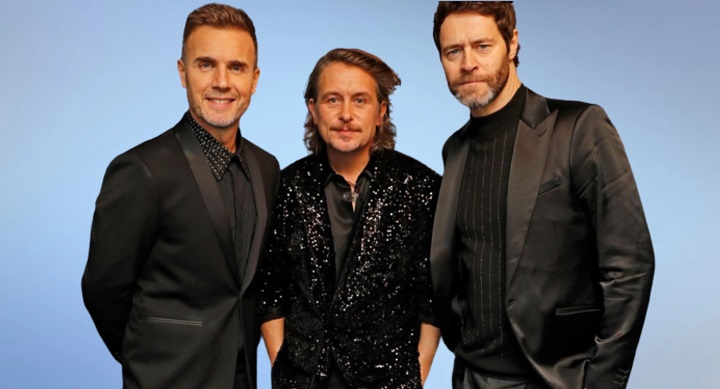
What Is Take That’s Most-Streamed Song?
Rule the World is Take That’s most-streamed single in the UK in the Official Charts Company’s published ranking.
The song, released in 2007 and associated with the fantasy film Stardust, recorded 101 million UK streams in the published figures.
It finished ahead of two other major Take That hits:
| Rank | Song | Release year | UK Singles Chart peak | Reported UK streams |
|---|---|---|---|---|
| 1 | Rule the World | 2007 | 2 | 101 million |
| 2 | Shine | 2007 | 1 | 95 million |
| 3 | Back for Good | 1995 | 1 | 87 million |
Data note: These figures come from the Official Charts Company’s ranking published in connection with the band’s 2026 Netflix documentary. They represent the reported totals at that point, not continuously updated live stream counts.
The full ranking includes songs from the original five-member group, the successful reunion years and later releases by Gary Barlow, Mark Owen and Howard Donald.
Take That’s 20 Most-Streamed Songs in the UK
The following ranking covers Take That’s biggest streaming singles in the UK, as published by the Official Charts Company.
| Rank | Take That song | Original release |
|---|---|---|
| 1 | Rule the World | 2007 |
| 2 | Shine | 2007 |
| 3 | Back for Good | 1995 |
| 4 | Patience | 2006 |
| 5 | Greatest Day | 2008 |
| 6 | These Days | 2014 |
| 7 | The Flood | 2010 |
| 8 | Relight My Fire (featuring Lulu) | 1993 |
| 9 | A Million Love Songs | 1992 |
| 10 | Giants | 2017 |
| 11 | Pray | 1993 |
| 12 | Cry (Sigma featuring Take That) | 2016 |
| 13 | Could It Be Magic | 1992 |
| 14 | How Deep Is Your Love | 1996 |
| 15 | Everything Changes | 1994 |
| 16 | Said It All | 2009 |
| 17 | It Only Takes a Minute | 1992 |
| 18 | Out of Our Heads | 2018 |
| 19 | Kidz | 2011 |
| 20 | Up All Night | 2009 |
The most striking aspect of this list is how strongly Take That’s comeback material performs.
Songs released between 2006 and 2010 occupy five of the top seven positions, showing that the band’s second era produced music with lasting streaming appeal.
It also demonstrates why Take That deserve a place in discussions about the most successful boy bands of all time.
The Top 10 Take That Songs Ranked by UK Streams
1. Rule the World (2007) – 101 Million UK Streams
Official Singles Chart peak: Number 2
It might seem surprising that Take That’s most-streamed song never reached the top of the UK Singles Chart.
Yet Rule the World has become one of the group’s defining recordings, combining an emotional melody, sweeping production and a chorus designed for enormous venues.
Released in 2007, the song featured in Matthew Vaughn’s fantasy film Stardust, starring Charlie Cox, Claire Danes, Michelle Pfeiffer and Robert De Niro.
Its cinematic association helped introduce the track to audiences beyond the band’s established fanbase.
The song was also included on a later edition of Beautiful World, Take That’s hugely successful comeback album.
Unlike many singles that enjoy a short period of intense popularity before fading, Rule the World has remained relevant through radio play, live performances and personal playlists.
It is a natural choice for weddings, anniversary celebrations and emotional television moments.
The song’s broad appeal is particularly impressive because it arrived more than a decade after Take That’s original commercial breakthrough.
Why it remains so popular: Its uplifting message, memorable chorus and association with important personal moments have given it a life well beyond its initial chart run.
2. Shine (2007) – 95 Million UK Streams
Official Singles Chart peak: Number 1
Shine represents the brighter, more playful side of Take That’s comeback.
Released as a single from Beautiful World, the song features Mark Owen on lead vocals and a distinctive, theatrical arrangement.
Its energetic piano-driven sound offered a contrast to the group’s more familiar ballads.
That difference helped establish the reunited Take That as a band capable of creating new hits rather than simply recreating their 1990s success.
The track became a major live favourite, with its celebratory atmosphere lending itself to large audiences and televised performances.
Mark Owen’s contribution also demonstrated that the group’s vocal identity extended beyond Gary Barlow’s lead performances.
Readers interested in his career can explore MarkMeets’ profile of Mark Owen’s music career and success with Take That.
Why it remains so popular: Shine is instantly recognisable, upbeat and well suited to feel-good playlists.
3. Back for Good (1995) – 87 Million UK Streams
Official Singles Chart peak: Number 1
Few British pop ballads are as closely associated with the 1990s as Back for Good.
Written by Gary Barlow, the song appeared on Take That’s third studio album, Nobody Else, and became one of the group’s biggest international successes.
Its appeal lies in its simplicity.
The arrangement allows the melody and harmonies to carry the emotion, while the lyrics express regret and the desire for reconciliation.
The song also arrived at an important point in the group’s history, shortly before Robbie Williams departed.
For many listeners, it remains the definitive recording by the original five-member line-up.
Although Back for Good ranks third for UK streaming, its original commercial performance was exceptional.
It spent four weeks at Number One in Britain and became Take That’s first million-selling UK single.
Why it remains so popular: It has the emotional directness of a classic love song and continues to appeal to listeners who were not born when it was released.
4. Patience (2006)
Official Singles Chart peak: Number 1
When Take That returned with Patience in 2006, there was no guarantee that the reunion would produce a major contemporary hit.
The group had been absent from the singles chart for years, and the pop landscape had changed considerably.
Yet Patience immediately established that Take That could succeed as a recording act again.
Its restrained opening, distinctive harmonies and increasingly powerful chorus marked a more mature musical direction.
The single reached Number One in the UK and helped launch the Beautiful World era.
It also won British Single at the 2007 BRIT Awards.
For many fans, Patience is the song that transformed Take That’s reunion from a nostalgia-driven event into a genuine second career.
5. Greatest Day (2008)
Official Singles Chart peak: Number 1
Greatest Day became one of Take That’s signature songs of the late 2000s.
Released as the lead single from The Circus, it combined an optimistic message with the group’s increasingly polished, arena-ready sound.
Its appeal extends beyond conventional pop listening.
The song is frequently associated with celebrations, sporting occasions and major public events.
In 2023, Take That performed Greatest Day during the Coronation Concert at Windsor Castle.
MarkMeets covered the occasion in its review of the best performances from King Charles’ Coronation Concert.
The continued popularity of Greatest Day shows how effectively Take That have created songs suited to communal experiences.
6. These Days (2014)
Official Singles Chart peak: Number 1
These Days marked another significant change in Take That’s history.
Released in 2014, it was the group’s first single as a trio following Jason Orange’s departure.
Gary Barlow, Mark Owen and Howard Donald adopted a brighter, dance-oriented pop sound, moving away from some of the orchestral arrangements associated with their previous albums.
The result was another UK Number One.
Its strong position in the streaming ranking demonstrates that Take That’s appeal continued after their line-up changed again.
Rather than relying exclusively on established hits, the remaining members found a way to adapt their sound to a new phase of their career.
7. The Flood (2010)
Official Singles Chart peak: Number 2
The Flood marked Robbie Williams’ return to Take That for the Progress album.
The reunion of all five original members generated enormous public interest.
Musically, the single combined dramatic production with a sense of anticipation that reflected the significance of the moment.
Its accompanying video featured the band rowing together, a fitting image for a group whose history included both personal disagreements and eventual reconciliation.
Although The Flood reached Number Two rather than Number One, it remains one of the most important songs in the band’s story.
It represented the possibility of rebuilding relationships that had once seemed permanently damaged.
Robbie Williams subsequently continued his successful solo career, which MarkMeets explored when reporting on his 25th-anniversary solo album XXV.
8. Relight My Fire (1993)
Official Singles Chart peak: Number 1
Take That’s version of Relight My Fire, featuring Lulu, became one of their most memorable early hits.
Originally recorded by Dan Hartman, the song was transformed into a high-energy pop and dance recording.
The collaboration brought together two generations of British pop audiences.
It also highlighted the group’s ability to reinterpret an established song and make it part of their own identity.
The track remains strongly associated with Take That’s original period of chart domination.
9. A Million Love Songs (1992)
Official Singles Chart peak: Number 7
A Million Love Songs is an important early example of Gary Barlow’s songwriting ability.
Released before Take That became consistent chart-toppers, the ballad demonstrated a musical maturity that distinguished the group from some of their contemporaries.
Its piano-led arrangement and romantic lyrics helped establish a formula that would later produce Back for Good and other major hits.
Although it never reached Number One, its position among the band’s most-streamed songs shows how enduringly popular their earlier ballads remain.
10. Giants (2017)
Official Singles Chart peak: Number 13
Giants appeared on Take That’s 2017 album Wonderland.
By this stage, the group had already survived several major changes in membership and musical direction.
The song embraced an energetic contemporary pop sound, with a large chorus suited to live performances.
Its inclusion in the streaming Top 10 is particularly interesting because it was not one of the band’s biggest chart hits.
That contrast reinforces an important point: a song’s original chart peak does not necessarily predict its long-term streaming popularity.
Take That’s Other Most-Streamed Songs: Numbers 11–20
The second half of the Top 20 contains several tracks that played major roles in the band’s career.
11. Pray (1993)
Pray gave Take That their first UK Number One single.
Its success established the group as a dominant force in British pop and marked the beginning of an extraordinary run of chart hits.
12. Cry – Sigma Featuring Take That (2016)
This collaboration with electronic duo Sigma introduced Take That’s vocals to a dance-oriented production.
Its inclusion demonstrates how collaborations can reach audiences beyond a group’s traditional fanbase.
13. Could It Be Magic (1992)
Take That’s interpretation of the Barry Manilow song became one of their earliest major hits.
The recording is especially associated with Robbie Williams’ lead vocals and the band’s energetic early performances.
14. How Deep Is Your Love (1996)
Their cover of the Bee Gees classic became the group’s final single before their original split.
It reached Number One and remains closely connected with the emotional conclusion of Take That’s first era.
15. Everything Changes (1994)
Featuring Robbie Williams on lead vocals, Everything Changes captured the confident pop sound of Take That’s early chart success.
Its catchy chorus helped make it another UK Number One.
16. Said It All (2009)
Taken from The Circus, Said It All showed a more reflective side of the band’s comeback.
Its enduring streaming popularity reflects the strength of their later songwriting, even beyond the biggest chart-topping singles.
17. It Only Takes a Minute (1992)
This early hit helped Take That build momentum before their breakthrough run of Number Ones.
Their energetic version of the Tavares song became a favourite among fans of the original line-up.
18. Out of Our Heads (2018)
Released during the trio’s later career, Out of Our Heads demonstrated their willingness to experiment with a more playful pop sound.
It also introduced the band to listeners who primarily knew their more recent material.
19. Kidz (2011)
Kidz stands out for its heavier electronic production and distinctive rhythmic sound.
Released during the Progress era, it reflects the group’s willingness to move beyond conventional boyband pop.
20. Up All Night (2009)
Up All Night closes the streaming Top 20.
The song’s relaxed, upbeat style contrasts with the grand ballads for which Take That are best known.
Its continued popularity illustrates the range of the band’s catalogue.
Why Is Rule the World Bigger on Streaming Than Back for Good?
The difference between Rule the World and Back for Good is one of the most interesting aspects of Take That’s streaming success.
Back for Good was a huge physical single in 1995, when listeners primarily bought music on CD, cassette and other formats.
Rule the World arrived in 2007, much closer to the growth of digital music and the eventual dominance of streaming.
But release timing is only part of the explanation.
Streaming rewards repeated listening
Traditional singles charts historically reflected purchases during a defined period.
Streaming allows songs to accumulate plays over many years.
A track that remains popular on playlists can continue building its total long after its original release.
Film appearances introduce songs to new audiences
Rule the World benefited from its association with Stardust.
Film soundtracks can introduce recordings to listeners who may not otherwise follow the artist.
Emotional songs have long lives
Songs associated with weddings, celebrations and personal memories can remain popular for decades.
Both Rule the World and Back for Good benefit from this, but the published streaming figures place Rule the World ahead.
Chart peaks and streaming totals measure different things
A Number One single achieves the highest position on the weekly chart.
A streaming total measures accumulated listening over a period.
They are not interchangeable indicators.
That explains how Rule the World can be Take That’s most-streamed song while having peaked at Number Two.
How Many UK Number One Singles Have Take That Had?
Take That have achieved 12 UK Number One singles, according to the Official Charts Company.
Their chart-toppers span the original 1990s line-up and the group’s successful comeback.
Notable Number Ones include Pray, Relight My Fire, Babe, Everything Changes, Back for Good, Never Forget, Patience, Shine, Greatest Day and These Days.
The band’s success is especially notable because it has extended across different musical eras, changes in membership and evolving listening habits.
It also places them among Britain’s most commercially successful pop groups.
How Take That’s Line-Up Changed Over the Years
Take That originally consisted of Gary Barlow, Mark Owen, Howard Donald, Jason Orange and Robbie Williams.
The group rose to fame in the early 1990s, becoming one of Britain’s biggest pop acts.
Robbie Williams left in 1995, and the remaining four members announced the group’s split in 1996.
The four-member reunion
Take That reunited in 2005 without Robbie Williams.
The comeback produced major hits including Patience, Shine, Rule the World and Greatest Day.
The success of this period was particularly significant because the group returned with commercially successful new material rather than relying entirely on their earlier catalogue.
Robbie Williams returns
Robbie rejoined for the Progress era in 2010.
The reunion brought the original five members back together and produced the hit The Flood.
It became another important chapter in the group’s story.
Take That as a trio
After Jason Orange departed in 2014, Gary Barlow, Mark Owen and Howard Donald continued as a trio.
They released III, Wonderland and This Life, maintaining their presence in British music.
Howard Donald has also pursued work outside the group, including DJ performances. MarkMeets previously reported on Howard Donald’s efforts to establish himself as a DJ.
Take That Netflix Documentary: What Does It Cover?
Netflix released its three-part Take That documentary on 27 January 2026.
The series traces the group’s beginnings, commercial success, internal tensions, split and reunion.
It features Gary Barlow, Mark Owen and Howard Donald alongside archive material involving Robbie Williams and Jason Orange.
Episode 1: Take That Part 1
The opening episode explores the formation of the five-member band and its rise to national fame.
It examines the early years when Take That became one of the defining pop acts of the 1990s.
Episode 2: Take That Part 2
The second episode examines the upheaval surrounding the band’s original split and the challenges of moving into solo careers.
Episode 3: Take That Part 3
The final episode focuses on the reunion and the band’s attempts to move forward after years of separation.
The documentary offers useful context for understanding why songs from the group’s different eras continue to resonate with listeners.
The series is available through Netflix’s official Take That documentary page.
Take That’s Place in British Pop History
Take That’s success has lasted far longer than the typical lifespan of a pop group formed around youthful appeal.
Their original chart domination was remarkable, but the comeback years are arguably what make their story distinctive.
Rather than returning only for a nostalgic tour, the group recorded songs that became major hits in their own right.
The streaming ranking supports that assessment.
The top two songs, Rule the World and Shine, were both released during the comeback period.
Meanwhile, Patience, Greatest Day and The Flood also feature prominently.
The group has continued to reach audiences through concerts, television appearances and music releases.
Their songs have become part of British popular culture, from early 1990s chart programmes to major national celebrations.
For more about the group’s history, MarkMeets has also published a collection of Take That facts covering their formation, reunion and career milestones.
Frequently Asked Questions About Take That’s Most-Streamed Songs
What is Take That’s most-streamed song in the UK?
Rule the World is Number One in the Official Charts Company’s published UK streaming ranking, with 101 million streams reported.
What is Take That’s second most-streamed song?
Shine ranks second, with 95 million reported UK streams.
How many UK streams does Back for Good have?
The Official Charts Company’s published ranking reports 87 million UK streams for Back for Good.
Did Rule the World reach Number One in the UK?
No. Rule the World peaked at Number Two on the Official Singles Chart.
Which Take That song has the most UK streams from the 1990s?
Back for Good is the highest-ranked 1990s release in the published streaming Top 20.
What was Take That’s first UK Number One?
Pray became their first UK Number One single in 1993.
How many Number One singles have Take That had?
Take That have achieved 12 UK Number One singles.
Which Take That songs feature Mark Owen on lead vocals?
Mark Owen is particularly associated with Shine, one of the band’s biggest comeback hits.
Which Take That song was featured in Stardust?
Rule the World was associated with the 2007 fantasy film Stardust.
Is Robbie Williams in Take That now?
Take That have continued as the trio of Gary Barlow, Mark Owen and Howard Donald. Robbie Williams remains associated with the band’s original line-up and the Progress reunion.
How many episodes are in the Take That Netflix documentary?
The 2026 Netflix documentary contains three episodes.
Are Take That’s UK streaming totals the same as Spotify streams?
No. UK streaming totals reported by the Official Charts Company are not the same as worldwide plays on a single platform such as Spotify.
Why Take That’s Most-Streamed Songs Still Matter
Take That’s streaming success reveals a group whose popularity extends well beyond the decade in which they first became famous.
Their biggest streaming hit is not one of their original 1990s Number Ones, but Rule the World, a song released during their comeback.
Shine follows in second place, while Back for Good remains their most successful 1990s song in the published ranking.
Together, these recordings show how Take That have connected with different generations of listeners.
The group’s greatest achievement may be that their second career produced songs every bit as enduring as their first.
For a band that once appeared to have reached its conclusion in 1996, that is a remarkable legacy.
Author Profile

- The MarkMeets Editorial Team covers entertainment news, film and television, music, and celebrity culture. Based in London, our writers report on red carpet premieres, review the latest releases and share news from the events and people shaping the entertainment industry.
Latest entries
 MoviesMonday, 23 November 2026, 11:15The Greatest Thriller Movie Performances of All Time Ranked
 EntertainmentMonday, 23 November 2026, 10:4510 Star Wars Characters with Radically Different Stories in Canon and Legends
 EntertainmentSunday, 22 November 2026, 19:30Woody Harrelson Movies and TV Shows: His 10 Best Roles Ranked
 LifestyleWednesday, 11 November 2026, 14:00Nourishing Post Workout Snacks for Optimal Recovery






You must be logged in to post a comment.