By Mark Boardman, founder and entertainment editor of MarkMeets
influencersgonewild can refer to a website using that exact name or, more loosely, to viral clips of creators filming in public, pulling pranks or facing backlash. The Instagram account Influencers in the Wild has its own name and shares behind-the-scenes footage. Here I explain the clips and what happens after they spread.
As the founder and entertainment editor of MarkMeets, I follow viral controversies and how fan communities respond to them. On London red carpets, I’ve seen how a few seconds filmed from opposite sides of a barrier can give people very different impressions of the same encounter.
I use that experience to look at three things I’d want to know before sharing a clip. What happened outside the frame? Who supplied the caption? And what happens to the person in the footage once the internet gives it a life of its own?
On this page
- What influencersgonewild means and where the Instagram account fits in
- Why I think creator clips spread
- Where I draw the line between awkward filming and harm
- How reposts and captions shape a creator’s reputation
- What I’d check before backing a creator
- Frequently asked questions
What does influencersgonewild mean?
I think of “influencers gone wild” as shorthand for a kind of footage. It can be as harmless as someone getting caught practising a dance on a high street or as serious as a creator putting a stranger on camera and making an allegation about them. I’d want to see the clip and where it came from before deciding which sort of story I had.
Where Influencers in the Wild fits in
The meme creator Tank Sinatra launched that Instagram account in 2020 and built it around footage submitted by viewers. I can see why the format caught on. Where the creator’s finished post shows a perfectly timed shot in the middle of a busy street, the submission might show somebody stepping around a tripod while their mate waits outside a shop. PetaPixel’s coverage of the account’s launch
I find plenty of those scenes funny. I also think the format makes it very easy to mistake the effort of making something for evidence of bad behaviour. I’ve spent enough time around red carpets to know how odd a polished image can look from three feet to the left.
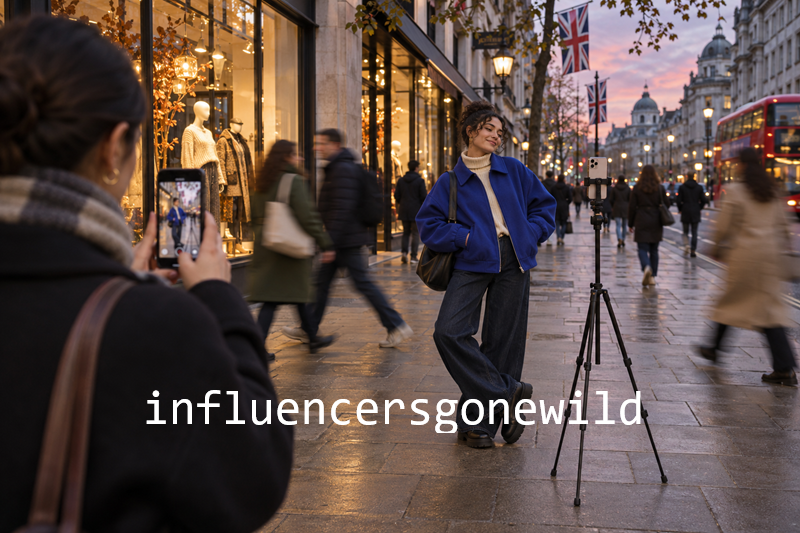
Why I think influencer clips spread
I recognise the work behind the polished post
A glossy fashion video tells me how somebody wants me to see a coat. A bystander’s clip tells me how many times they had to walk past a shop window to get it right. I find the second one funny because I recognise the gap between looking effortless and actually doing something effortlessly.
That glimpse can make a creator seem more relatable, but I wouldn’t take it as a guarantee that I’ve seen the real person. The passer-by has chosen an angle and a stopping point too. If they upload the seventh take with a caption about vanity, I might miss the fact that the other six attempts lasted all of three minutes and bothered nobody.
I want to understand the joke everyone is making
When a clip turns into a reference, I can encounter the reaction before I see the footage. A friend sends me a parody, somebody replies with a line from the clip and now I want to know what they’re talking about. I can watch the video just to follow the conversation, and that view sits alongside the views of people who loved it, hated it or thought it was staged.
That’s why I’m wary of reading approval into a large view count. I’ve clicked on clips I wouldn’t recommend to anyone simply because the shorthand around them had become impossible to follow. By the time I get there, I might be watching a different edit from the one that started the discussion.
Why I watch the second camera
I like to picture two phones on the same pavement. One records a creator getting the shot they came for. The other records a stranger making that creator look ridiculous. Give each clip a caption and I can have two different stories ready to publish before either person gets home.
I keep coming back to the person holding the second phone. They can show me what the creator left out of the frame, and they can leave just as much out of their own.
That second angle can reveal something the first camera hides. I might see how much space a shoot takes up or how a creator speaks to somebody who walks through the frame. I might also see someone filming from a distance who arrived halfway through and decided they knew exactly what was happening.
What a red-carpet clip can teach me about framing
At a premiere, I can stand in an accredited press position and see a guest move straight past a microphone. A fan filming from the other side might capture the same guest smiling and waving a few seconds later. The short version could run as “star snubs interviewer” or “star makes time for fans”, depending on which bit someone uploads.
If I’m covering the premiere, I have more to go on. I know where the interview positions are, and I can see whether a publicist is moving talent along because the screening is due to start. I can ask the team what happened. How red-carpet interviews work at UK premieres explains some of the practical arrangements that rarely make it into a fan’s clip.
I carry the same habit over to public creator footage. When somebody looks rude in an edit, I want to know whether I’ve seen the whole exchange. When somebody clears a space to take a photograph, I want to know how they asked, who was inconvenienced and whether that happened once or became a routine. Those details determine how I’d write the story, and whether I’d write it at all.
What I can actually see in a gym clip
One example I looked at was a 2024 TikTok from fitness creator Alejandra Muro. In Dexerto’s reporting, a woman moved her belongings away from the area Muro was filming in, and Muro’s caption cast the encounter as hostility towards her. Fitness creator Joey Swoll challenged that reading in a response.
I can describe the woman moving. I can quote or paraphrase how the uploader interpreted it. I’d need more evidence to say why the woman moved, and I’d want to know whether she’d agreed to become part of the story before putting her face in front of a second audience.
That last bit matters to me because a reply can extend the very exposure it’s criticising. If I’m arguing that someone deserved privacy in a gym, why does my argument need to show them again? I can discuss the uploader’s choices with a blurred frame, or describe what the footage shows and leave the person out altogether.
I think of the lighter version of that process when I read our coverage of how Louis Theroux’s “Jiggle Jiggle” went viral. A clip can reach a whole new audience through a remix, and that audience may remember the remix more readily than the material it came from.
Where I draw the line between awkward and harmful
A tripod on a pavement can make me roll my eyes. I’m more interested in who can refuse to participate. If I can simply walk around the tripod, I’ve lost about two seconds. If I’m working the till and a creator keeps pushing a joke after I’ve asked them to stop, leaving the scene could mean leaving my job unattended.
I’d make a similar distinction between a stunt that looks risky and one that actually passes the risk on to someone else. A creator can decide what they’re willing to do on camera. I’d ask who else is expected to handle the consequences, from the member of staff who has to intervene to the stranger whose face ends up attached to the story.
| What I’m watching | What I’d check before sharing |
|---|---|
| An awkward public photo shoot | Can people pass freely? Does the clip show disruption, or am I reacting to an unflattering angle? |
| A prank featuring a worker | Could the worker end the exchange without risking their job? Was their objection kept in the edit? |
| A creator accused of starting a row | Do I have the original upload, its caption and the part immediately before the confrontation? |
| A disputed product demonstration | Can I see how the result was achieved? Which part of the allegation is actually supported? |
| A response criticising the original clip | Has the response obscured bystanders, or given their faces another round of exposure? |
I use that last row on myself. It’s easy to call for accountability while doing exactly what made the first post take off. If I’m going to give a clip a second outing, I want to be able to say what a reader will learn from seeing it.
How a joke turns into someone’s reputation
The thing I find most revealing about a pile-on is the jump from a verb to a label. Someone blocked a doorway becomes someone who thinks they own the place. Once I’ve seen that label, I know how easy it is to read the next clip as confirmation. The next uploader might even put the judgement in the title so I make it before I press play.
I use three questions when I’m weighing up whether a clip deserves any more attention from me. What can I see and hear for myself? What has the person posting it asked me to assume? And whose life gets harder if I pass it on?
Sometimes the answers point to a real story. If a creator repeatedly makes retail staff the target of pranks, I’d want to ask what those workers were expected to put up with and whether they could walk away. If all I have is footage of a person looking awkward while they practise a dance, I’ve probably found someone doing a job that looks faintly absurd from the wrong side of the camera.
How I read a comment section after a repost
I start by asking who the comments are addressing. Under the original upload, regular viewers may know the creator’s running jokes or remember a similar incident. Under a repost, many commenters are answering the person who supplied the new caption. I can see hundreds of people arguing about a clip while talking about two different things.
That matters when somebody says “the audience turned”. I’d want to know which audience. I might find longstanding followers asking reasonable questions under the original video and a separate crowd leaving insults under the repost. Putting both reactions under one headline gives the insults the authority of the people with an actual relationship to the creator.
I’d also check dates before calling something a pattern. Imagine I see one gym clip on three different accounts over three weeks. If the usernames, captions and crops change, it’s easy to remember three incidents. I check details that survive a crop, such as clothing, background and the order of events. If every clip takes me back to one upload, I have one example to assess.
Why the apology has further to travel
If I see the original post on TikTok and a reaction to it on Instagram, where would I even go looking for the correction? The audience that saw the clip on a repost account might never have known the creator’s name, let alone followed them closely enough to see their response. I think that’s one reason the earliest version of an incident can stay attached to somebody long after the people involved have moved on.
I’d look for a response that names the specific choice the creator made and says what changed afterwards. For a video that wrongly portrayed a stranger, I’d want the correction on the same account that published the claim, written so it makes sense to someone who has only seen a screenshot. I’d also want the creator to ask major repost accounts to carry the correction without circulating the stranger’s face again.
The harder part is giving the person involved some say in what happens next. If I were on the receiving end, I might prefer a private acknowledgement and a public correction that leaves my name out. A filmed reunion might make a neat follow-up post. It would also ask me to do another day’s work for someone else’s account.
I see a similar distinction in our piece on attention and authority. A creator can command the feed for a day while leaving regular viewers unsure whether they’ll take responsibility the next time something goes wrong.
What I’d do when a clip resurfaces months later
If I were deciding whether to cover a resurfaced video, I’d work out what had actually happened that day. Did the creator do something new? Had somebody found a longer recording? Or had an old clip simply reached people who hadn’t seen it? The third version can still be interesting, but the headline needs to make the date clear.
I’d go back through the existing coverage, look for the original response and check what I could verify about any changes the creator said they’d made. If the public record is thin, I’d say how far it goes. The fact that I can find the accusation faster than I can find the reply tells me something about circulation, and very little about what happened afterwards.
For a creator reading this, I’d keep a dated record of any correction and make it easy to find from the original post where possible. I’d put the material detail near the top. If I’m searching for a specific disputed incident six months later, a clear explanation with a date will help me more than an hour-long livestream with the answer halfway through.
What I’d look for before backing a creator
I’d start with how the creator gets the shot. If the format only works when a stranger is embarrassed, startled or put on the spot, I’d want the agency to explain how people can decline to take part. I’d also watch several ordinary posts. A creator’s reply to a fair complaint on an unremarkable Tuesday can tell me more about how they’ll handle a problem than a media-trained answer on a pitch call.
Then I’d check what the audience is actually coming for. A million views on a row can include people who arrived to laugh, people defending the creator and people watching just long enough to understand a reference in a group chat. I’d need to see how the creator earns trust on the subject the brand wants them to talk about. If I’m paying someone to demonstrate a product, it matters whether their usual audience takes their demonstrations seriously.
What the mascara row showed me about trust
In 2023, beauty creator Mikayla Nogueira posted a sponsored TikTok demonstrating L’Oréal’s Telescopic Lift mascara. Viewers alleged she’d used false lashes to achieve the finished look. I found coverage of the allegation and the sponsorship, and I’d leave the question of what she wore there unless I had evidence that settled it. TIME’s reporting on the mascara dispute
What caught my attention was how quickly the discussion moved from the product to the reliability of the demonstration. If I’m watching to decide whether to buy a mascara, I want to see what happens between the first brush stroke and the finished shot. A continuous take, consistent lighting and a clear view of the lashes would answer more of my questions than a long caption insisting the result speaks for itself.
I’d ask for those choices at the briefing stage. I’d also agree who handles a correction if one is needed and where it goes. When the clip is already being passed around, that’s a poor time to discover the agency, creator and brand each thought someone else was responsible for responding.
I’d apply the same care to the way the commercial relationship is presented. In our article on what a sponsored post is and how brands use it, the audience is reading material that somebody has paid to place. On TikTok, that commercial relationship can be easier to miss because the ad looks so much like the creator’s usual posts.
What I’d change before the next upload
If I were briefing someone to film in a gym, a café or a shop, I’d agree where the camera can point, what happens when a member of the public enters the frame and who checks the final edit. I’d build that into the shoot while there’s still time to move the phone. Blurring faces afterwards can help, but I’d still review the audio, name badges and anything else that could identify someone.
I’d also build a pause into the way a creator responds. If the first reaction is “I need to post my side”, I’d ask what the post is meant to do. Correcting the timing of an incident calls for evidence of the timing. Addressing someone’s complaint about being filmed calls for a conversation about what they want taken down. I’d give each problem the kind of response it actually needs.
As a reader, I can make a smaller change. If I’m about to send a clip to a group chat with the words “look at this idiot”, I can watch it once with the caption covered. Would I still think the same thing? If the judgement vanishes as soon as the caption does, I know how much work those few words were doing.
What I expect to get harder as clips become easier to edit
I’d verify the recording before judging the person
I already check the caption, crop and date. With AI-assisted editing, I’d also pay attention to whether the words I hear are present in the earliest version I can find. A clean-looking clip is easy to trust, especially when it confirms what I’ve already been told about the creator.
If I can only find reaction videos repeating the same edit, I’d describe the claim as circulating and keep looking for the source. The person making the allegation might have the original file, and the person being discussed might be able to point me to a longer recording. I’d rather wait for that evidence than attach someone’s name to a clip whose most important detail I can’t verify.
I’d give a correction somewhere to live
When I think about moderation, I keep coming back to copies. If the creator removes a misleading upload, I can still come across stitched reactions, screenshots and reposts that carry the old claim. I’d put a dated correction somewhere I could link to, with enough context that it still makes sense when someone opens it from a year-old thread.
Frequently Asked Questions About influencersgonewild
What kinds of clips does influencersgonewild describe?
I use it here for viral footage of creators at work in public and for clips that draw attention through pranks, disputes or backlash. I look at the source and the context before treating any of those clips as evidence of misconduct.
Is influencersgonewild the same as Influencers in the Wild?
I’d use Influencers in the Wild if I were looking for Tank Sinatra’s Instagram account. The similar-looking search term also turns up results for a website using the one-word name and for discussion of viral creator clips more generally.
Does a viral clip mean a creator lost their audience?
I’d look at how their regular followers responded and what happened on later posts. A burst of comments from people who arrived through a repost tells me how far the argument travelled. I’d need more evidence to say that the creator’s usual audience stopped trusting them.
What’s the first thing I’d check before sharing?
I’d look for the earliest upload and check when it was posted. Then I’d compare the original caption with the one on the version I was sent. If the two captions make different claims about the same footage, I’d stop and check what the recording itself supports.
The bit I think about before sharing
What keeps me interested in influencersgonewild is the switch in perspective. The creator thinks they’re filming a fashion post. The passer-by thinks they’re filming a joke. An audience that knows neither of them can turn the footage into an argument about manners, honesty or who gets to take up space.
I still laugh at harmless clips. I also know there’s a point at which I’m being invited to do something beyond laughing. If the joke needs me to believe I know the worst thing about a stranger from ten seconds of footage, I’ll keep scrolling. I’ve seen enough of what happens when the shortest version of a story becomes the one that sticks.
If you want to see how much happens beyond a short clip, read my guide to how London film premieres are organised. The next time a red-carpet video lands in your feed, see if you can work out where the camera was standing. Sometimes that tells you more than the caption.
Author Profile

- Mark Boardman is an established showbiz journalist and freelance copywriter whose work has been published in Business Insider, Daily Mail, Bloomberg, MTV, Buzzfeed, and The New York Post, amongst other media. Often spotted on the red carpet at celebrity events and film screenings, Mark is a regular guest on BBC Radio London and in demand for his opinions on media outlets such as Newsweek, Daily Express, and OK! Magazine, as well as Heart radio, Capital FM, LBC, and Radio 2. His TV credits include ITV News, This Morning, BBC News, The One Show, Sky News, GB News, and Channel T4. Mark is a keen traveller having visited 40+ countries, and a devout sports fan who also attends as many gigs as he can across the capital when not rubbing shoulders with the stars. Email Mark@MarkMeets.com
Latest entries
 Film PremieresMonday, 9 November 2026, 18:00Red Carpet Fan Access Decoded: 6-Month Field Study of Leicester Square Premiere Ballots, Security Protocols, and Fan Pen Placement
 Film PremieresTuesday, 3 November 2026, 17:00How Leicester Square Premiere Fan Ballots Really Work: Five Recent Events Compared
 Film PremieresSunday, 1 November 2026, 15:00Film Premiere Tickets vs Fan Access: What Are You Actually Getting?
 Featured ArtistSunday, 1 November 2026, 1:01Amaarae Featured Music Artist November 2026 on MarkMeets
Recent News, Photos, Videos, Reviews, Interviews And Opinions From MarkMeets.com
 Why Creators Are Turning Long YouTube Videos Into Shorter Clips
 Behind The Scenes Of Viral Trends
 The Rise of AI in Creator Workflows
 A Private Creator’s Guide to Using PixaryAI’s Dress Removal Tools Safely
 Creating Viral Video Content Made Easy with AI Singing and Talking Photo Generators
 The Glamorous World of Showbiz Parties, Viral Fame, and Global Brand Recognition
1 Comment