Think about the last great show you went to. You probably remember the music. But you also remember the big, bright screen behind the stage. It showed the faces, the colours, and the energy of the night. That screen did a lot of quiet work.
Today, many event planners use modular LED rental screens to create that kind of moment. These screens are built from small panels that lock together. You can make them big or small, flat or curved. And you only pay for them when you need them.
In this guide, you will learn what these screens are, why they matter and how to pick the right setup for your next event.
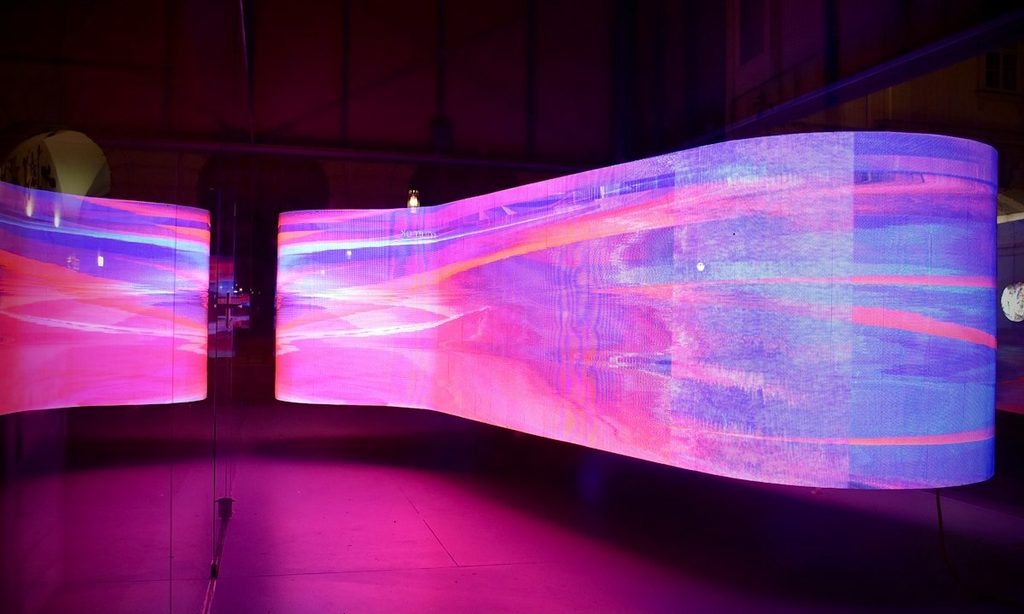
What Are Modular LED Rental Screens?
A modular LED screen is made of many small boxes called cabinets. Each cabinet holds rows of tiny LED lights. When you join the cabinets together, they work like one large screen.
The word “rental” matters here. Rental panels are made for events. They are light, strong and quick to set up. A crew can put them up, take them down and move them to the next city again and again.
Common rental cabinets come in sizes like 500 x 500 mm or 500 x 1000 mm. Many are made of die cast aluminum or magnesium alloy, which keeps them light. Fast locks on the sides let crews join panels in seconds.
Because the screen is built piece by piece, there is no fixed size. You can build a small wall for a hotel ballroom or a giant backdrop for a stadium.
Why Visuals Matter So Much at Live Events
People come to events to feel something. Good visuals help make that happen. Here is why a big screen makes such a difference:
- It brings the back row closer. Not everyone can stand near the stage. A screen with live camera shots lets every guest see the faces and the action.
- It sets the mood. Colors, motion and graphics can match the music or the message.
- It shares key details. You can show the schedule, speaker names or safety notes.
- It gives sponsors a spotlight. Brands can rotate ads between sets or sessions.
- It makes the event more shareable. A bright, bold stage looks great in photos and videos, so guests post more online.
In short, the screen is not just decoration. It is a tool that shapes how people feel and what they remember.
The Strategic Benefits of Modular LED Rental Screens
1. Freedom of Size and Shape
Every venue is different. One week you are in a small hall. The next week you are in an open field. Many planners now choose modular rental screen setups because they can grow or shrink the screen for each new space. Special angle locks, often up to about 15 degrees, even let you build curved walls.
2. Bright Enough for Daylight
Projectors often look weak in sunlight. LED screens do not have this problem. Outdoor rental panels can reach 5,000 nits or more, so your content stays clear even at noon.
3. Faster Setup and Lower Labor Costs
Time is money at events. Rental panels use quick lock systems, so crews can build the wall faster. Many panels also allow front or rear service, so a broken module can be swapped in moments without taking the wall apart.
4. Clear Images on Camera
Many events are filmed or streamed. A high refresh rate, such as 3840Hz or more, helps stop flicker and strange lines on camera. This keeps your live stream and social clips looking clean.
5. No Big Upfront Cost
Buying a large LED wall costs a lot. You also need to store it, move it and look after it. Renting lets you use top quality gear only when you need it. You also get support from people who set up screens every day.
Key Specs to Check Before You Rent
You do not need to be a tech expert. But knowing a few basic terms will help you ask the right questions.
| Spec | What It Means | Simple Guide |
| Pixel pitch | The space between LED lights, in millimeters | Indoor close viewing: P2.6 to P2.9. Outdoor: P3.9 to P4.8 |
| Brightness | How bright the screen is, in nits | Indoor: about 800 to 1,500 nits. Outdoor: 5,000 nits or more |
| Refresh rate | How many times per second the image updates | 3840Hz or higher for filming and streaming |
| IP rating | Protection from water and dust | IP65 or higher for outdoor use |
| Curve locks | Lets panels bend into a curve | Look for about plus or minus 15 degrees |
| Service access | How you reach the parts inside | Front and rear access makes repairs faster |
A quick tip on pixel pitch: A smaller number means a sharper picture up close. A simple rule many pros use is this: the closest good viewing distance in meters is about the same as the pixel pitch number. So a P3.9 screen looks best from about 4 meters away or more.
Matching the Screen to Your Event Type
Not every event needs the same screen. Here is how the choice changes by event type.
Concerts and Music Festivals
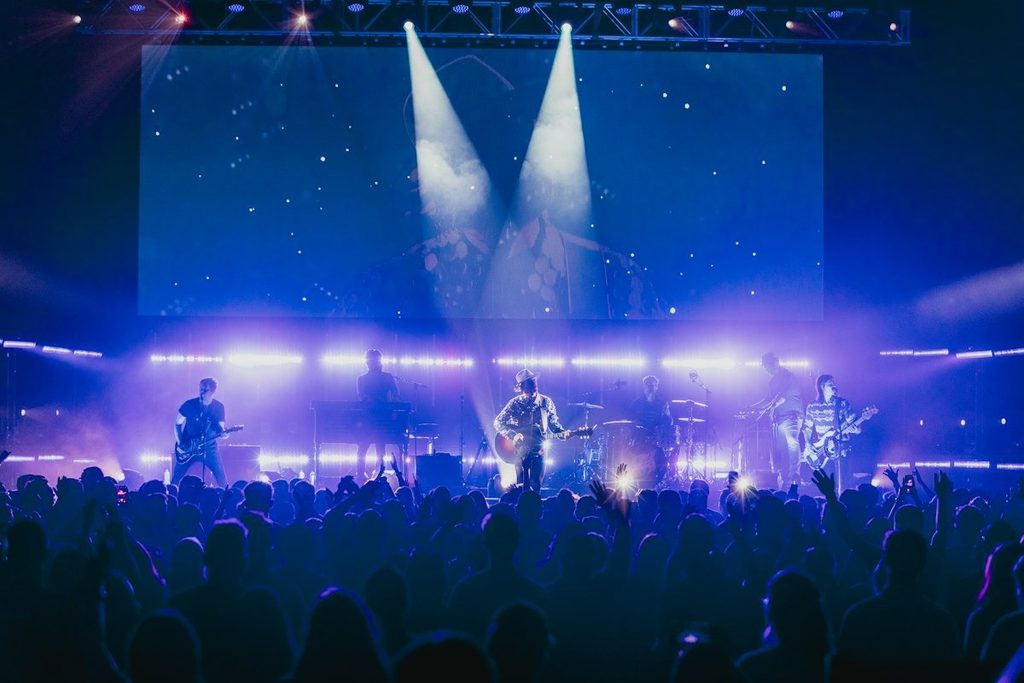
This is where LED screens shine the most. Big stages need high-impact event visual hardware that can handle bright lights, long hours and changing weather. Think large main walls, side screens for close ups and creative shapes that move with the music.
Corporate Conferences
Here, clear text matters most. Slides, charts and speaker names must be easy to read. A finer pixel pitch works well because guests sit fairly close.
Product Launches and Brand Events
A launch needs a “wow” moment. Curved walls, LED floors or unusual shapes can make the reveal unforgettable.
Weddings and Private Parties
A smaller screen can show photos, live video of the couple or a fun slideshow. It adds a personal touch without taking over the room.
Sports and Outdoor Screenings
Brightness and weather protection come first. Choose very bright panels with a strong IP rating.
How to Plan Your LED Screen Setup: Step by Step
- Know your audience. How many people will come? How far will the back row be from the stage? This tells you the screen size and pixel pitch you need.
- Check the venue. Is it indoor or outdoor? Where is the power? Can you hang the screen, or does it need a ground stand?
- Pick the right specs. Use the table above to choose pixel pitch, brightness and IP rating.
- Plan your content early. Ask your rental partner for the exact screen resolution. Then make your videos and graphics to fit that size.
- Ask about backup. Good setups use backup signal lines and spare modules. If one part fails, the show keeps going.
- Do a test run. Check your content on the real screen before guests arrive. Look at it from the front, the sides and the back.
Common Mistakes to Avoid
- Paying for more detail than you need. A very fine pixel pitch is wasted if your crowd stands far away.
- Forgetting about the sun. An indoor screen will look faded outdoors in daylight.
- Using the wrong content size. Stretched or blurry videos look bad on a big screen.
- Skipping the power plan. Large walls use a lot of power. Some panels use around 300 watts per square meter, so plan this early.
- Leaving no time for testing. Small problems are easy to fix before doors open, but hard to fix during the show.
Content Tips That Make the Screen Shine
Even the best screen needs good content. Keep these tips in mind:
- Use big, bold fonts that people can read from far away.
- Keep text short. A few words work better than a full paragraph.
- Use strong colors and high contrast.
- Add motion, but do not overdo it.
- Mix in live camera shots so the crowd feels part of the show.
- Try a social media wall, where guest posts appear on screen.
Frequently Asked Questions
What is a modular LED rental screen?
It is a large screen made from small LED panels that lock together. It is built for events, so it is easy to set up, take down and move.
Can LED rental screens be used outdoors?
Yes. Choose panels with an IP65 rating or higher and a brightness of 5,000 nits or more. These can handle rain, dust and sunlight.
What pixel pitch is best for a conference?
Most indoor conferences do well with a pixel pitch between P2.6 and P3.9. If guests sit very close, go for the smaller number.
Is an LED screen better than a projector?
For most events, yes. LED screens are much brighter, work in daylight and do not get blocked by people walking in front of a beam.
How much does it cost to rent an LED screen?
The price depends on screen size, pixel pitch, how many days you need it and whether a crew is included. Always ask for a full quote that covers delivery, setup, operation and teardown.
Final Thoughts
A great event is more than a stage and a sound system. It is a feeling that people carry home. Modular LED rental screens help you build that feeling. They give you bright, sharp visuals, a shape that fits any venue and the freedom to rent only what you need.
Start with your audience, choose the right specs and plan your content early. Do that, and your screen will not just fill the stage. It will make your event one that people talk about long after the lights go down.
Author Profile

- Jake contributes to MarkMeets, creating informative and enjoyable content
Latest entries
 BusinessFriday, 27 November 2026, 19:14What Makes an Industrial CNC Laser Cutting Machine Worth the Investment?
 PostsFriday, 27 November 2026, 19:12Spa & Massage and the Business of HabitByline
 PostsFriday, 27 November 2026, 19:10Creating High-Impact Events: The Strategic Role of Modular LED Rental Screens
 MusicFriday, 27 November 2026, 17:00Yungblud Net Worth 2026: How the British Rock Star Built His $10 Million Fortune
Recent News, Photos, Videos, Reviews, Interviews And Opinions From MarkMeets.com
 Beyond Corticosteroids: Modern Joint Viscosupplementation Options for High-Impact Active Lifestyles
 Why Bigger Screens Are Changing How We Watch Television
 What is a Clinical Psychologist? Understanding the Role, Responsibilities, and Impact
 Understanding High Risk Payment Gateways and Their Role in Payment Systems
 Is a Rental Water Purifier Worth It? Honest Pros and Cons
 Rental Demand, Resale Potential and Liquidity: The Three Numbers That Matter
You must be logged in to post a comment.